Short answer: Loose, pebble-like attic insulation is vermiculite, and most vermiculite sold in Canada came from the Libby, Montana mine as Zonolite, which was contaminated with amphibole asbestos. Only a lab test tells you whether yours is. We sample from multiple points in the attic and return accredited results in 24 to 48 hours.
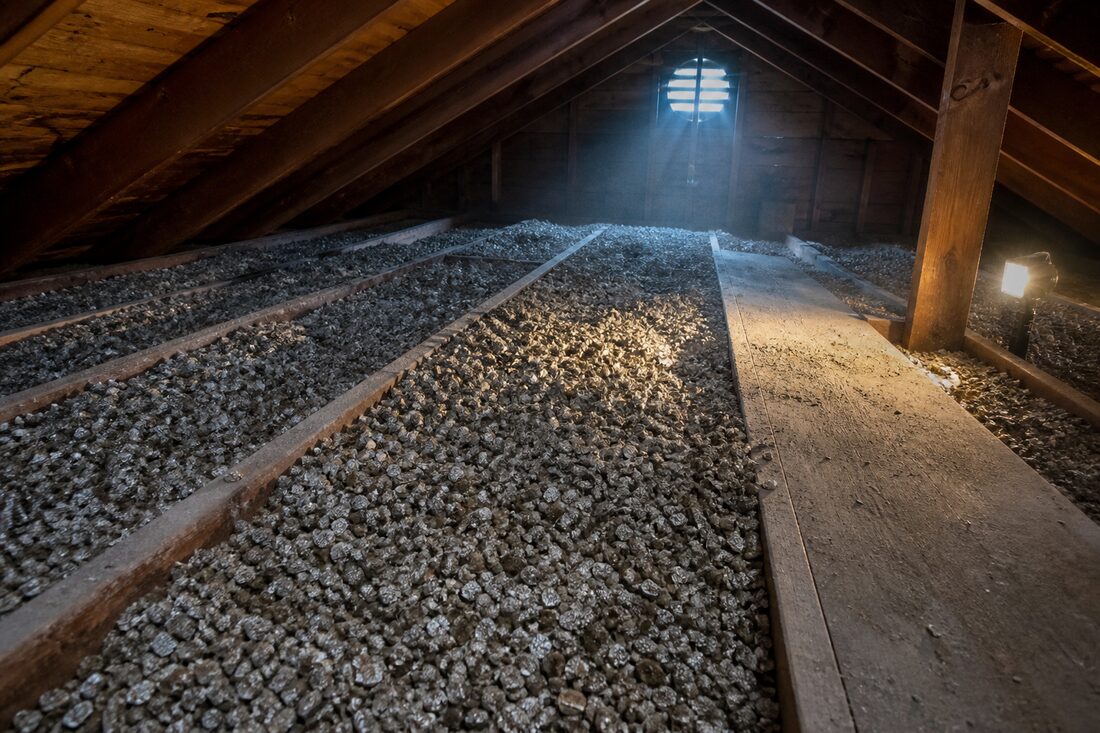
Why Does Vermiculite Keep Turning Up in Fraser Valley Attics?
Because it was cheap, light and fireproof, and it was poured into attics here for three decades. Thousands of homes built or re-insulated between the 1950s and the 1980s still have it.
From the 1950s through the 1980s, vermiculite was a popular loose-fill attic insulation in BC: cheap, light, fireproof, and easy to pour between joists. The dominant brand, Zonolite, was processed from ore mined in Libby, Montana, and that ore carried amphibole asbestos with it. Health Canada's position is blunt: if you have vermiculite insulation, assume it may contain asbestos until testing proves otherwise, and don't disturb it.
Thousands of Fraser Valley homes built or re-insulated in that era still have it sitting in their attics. It usually surfaces at the worst possible moment: a home inspection two weeks before closing, an electrician who refuses to run wiring through the attic, or an energy-retrofit crew that won't blow new insulation over unknown material.
How Do You Tell Vermiculite From Other Attic Insulation?
Vermiculite pours, everything else rolls or fluffs. If your attic holds loose, hard, pebble-like granules between the joists rather than batts or fluffy blown material, treat it as vermiculite until a lab says otherwise.
| What you see in the attic | Most likely material | Asbestos concern |
|---|---|---|
| Loose grey-brown to silver-gold pebbles, hard, slight shimmer | Vermiculite (often Zonolite) | Yes, test before disturbing |
| Pink or yellow rolled blankets between joists | Fibreglass batts | No |
| Grey, soft, shredded-paper fluff | Blown cellulose | No |
| White or pale-yellow loose fluff | Blown fibreglass | No |
| Dense grey-brown fibrous wool, heavier than fibreglass | Mineral or rock wool | No |
A visual guess is a starting point, not an answer. Older attics often hold two or three of these layered on top of each other. Walkthrough of the tells in our guide to pebbly attic insulation.
How Should Vermiculite Be Sampled?
From multiple locations and depths, never a single scoop. Contamination is uneven through the material, so a one-point DIY sample carries a meaningful false-negative risk.
Vermiculite contamination is uneven; asbestos fibres settle and concentrate unpredictably through the material. A single scooped sample, the typical DIY approach, has a meaningful false-negative rate. Our protocol samples from multiple locations and depths across the attic, using wet methods and sealed containers, with each point documented. Samples are analyzed at an accredited BC laboratory using methods appropriate for vermiculite, and you receive a written report suitable for contractors, buyers, insurers and WorkSafeBC purposes.
What Are Your Options After the Result?
Three, and only one of them involves abatement. A negative frees the attic, a positive you leave alone becomes a documented management decision, and a positive in the way of work means licensed removal.
- Negative: your attic is just an attic again. Renovate, re-insulate, sell, with the report as proof.
- Positive, undisturbed: leaving sealed vermiculite in place can be a legitimate management decision. The report documents what you have so future work is planned safely and disclosure at sale is clean.
- Positive, in the way: if renovation, wiring or air-sealing work needs that attic, removal must be performed by a WorkSafeBC-licensed abatement contractor. We can refer licensed firms and provide independent clearance testing after removal.
Vermiculite Testing FAQs
What does vermiculite insulation look like?
Loose, lightweight, pebble-like granules, grey-brown to silver-gold, often with a slight shimmer. It pours rather than rolls: if your attic has loose pellets between the joists instead of pink batts or blown fibre, it may be vermiculite.
Is all vermiculite dangerous?
No. Vermiculite itself is a harmless mineral. The problem is that most vermiculite insulation sold in Canada came from the Libby, Montana mine (sold as Zonolite), which was contaminated with amphibole asbestos. Only lab testing can tell whether yours is contaminated.
Can I just leave it alone?
If it tests positive but is sealed in an undisturbed attic, leaving it in place is often acceptable, but you must disclose it when selling, and any future work in the attic (wiring, pot lights, insulation top-ups) becomes regulated work. Most owners test so they can make that decision with real information.
Will vermiculite kill my home sale or insurance?
Untested vermiculite is a red flag that scares buyers, inspectors and some insurers precisely because it is an unknown. A negative test removes the issue entirely; a positive test with a documented management or removal plan is still far better than a question mark.
How is attic sampling done safely?
From the attic hatch with minimal disturbance, using wet methods and sealed containers. We take samples from multiple locations because contamination is not uniform across an attic, and single-scoop DIY samples produce false negatives.